
XequelBio
XequelBio develops groundbreaking therapies focused on advancing wound healing and tissue repair.

Resources
Partner with the Zucker Institute to access breakthrough MUSC technologies, connect with leading researchers, and advance innovations from discovery to market.
Browse technologies (opens in a new tab) How licensing works
Our portfolio of companies
Discover our diverse portfolio of startup companies, each making strides in their respective fields through innovative solutions. Explore a few standout companies from our portfolio and the ways they are making a difference in healthcare and biotech innovation.
XequelBio develops groundbreaking therapies focused on advancing wound healing and tissue repair.

Glycopath is advancing the field of glycobiology by developing diagnostic tools that enable faster and more accurate detection of disease markers through glycan analysis.

Leukogene Therapeutics is developing innovative immunotherapy solutions for the most difficult to treat cancers.

FRD Accel accelerates the path from research to market by providing resources, expertise, and funding for medical device and digital health technologies.

Neuroene Therapeutics is pioneering treatments that address cellular dysfunction in neurological disorders.

BlinkCNS provides innovative diagnostic tools to assess neurological health through non-invasive eye response measurements.

QuickSortRx utilizes data-driven technology to help hospitals and healthcare providers optimize their pharmacy purchasing and reduce drug costs.

A leader in telemedicine, Doxy.me offers secure, easy-to-use video conferencing solutions for healthcare professionals, enabling high-quality patient care remotely.

Mitochem Therapeutics develops treatments for mitochondrial diseases, targeting cellular dysfunction to enhance health and recovery.

SealCath LLC designs and manufactures innovative medical devices, with a focus on precision catheter technologies that improve patient outcomes in gastrointestinal procedures.
Licensing
The Zucker Institute partners with inventors and industry to translate MUSC research into real-world solutions, offering expert support in IP protection, commercialization, and relationship-building for long-term success.
Upon your company’s initial contact with the licensing representative, we can provide publicly available materials describing the invention for your preliminary review. If you believe that the technology might pose a solution to your company’s needs, then we move to put your company’s technical experts in contact with our inventors to confirm the many specific details surrounding the implementation of the invention in the corporate environment.
Often, we will ask your company to sign a Non-Disclosure Agreement (NDA) to protect any proprietary information, including information that may either reside in an unpublished patent application or may not be contained in the published patent. With an NDA in place, the technical teams can meet and discuss the technology.
Sometimes even after these technical discussions, uncertainties remain about the technology, and a brief period of further testing or evaluation may be desired. We offer Option Agreements to reserve the exclusive right to obtain a license agreement to the company. The Option Agreement will include developmental milestones to be completed by the company before it may exercise the option to obtain a license. Financial consideration for holding this exclusive Option usually includes the company’s reimbursement of the University’s patent costs incurred during the Option Period, as well as an Option Fee.
In many cases, no further testing is necessary, and the negotiation of an exclusive or non-exclusive License Agreement can begin. For those companies who have completed licensing transactions with other major research universities, you will find few surprises in our agreements. For companies who are doing such deals for the first time, we recommend referring to our Licensing Principles and License Agreement Terms.
Just as every technology is different, so too is every deal. We usually start with a term sheet covering definitions, diligence, and financial terms, but we are ready to discuss adjusting any of the terms that we are empowered to change. These changes would reflect the unique needs of both parties and the economic and practical realities that define the market opportunity being addressed.
How we license
MUSC has three core missions: education, research, and patient care. In licensing discussions, their primary goal is to ensure the technology benefits the public by reaching the marketplace promptly, while also securing a fair return on the investment made by the university and taxpayers.
The Bayh-Dole Act of 1980 allows universities to own inventions made with federal funding, supported by policies that typically grant them ownership of employee inventions, excluding scholarly works like textbooks. Universities usually retain ownership of technology, offering exclusive or non-exclusive licenses while managing patents or copyrights. This approach ensures flexibility to seek alternative commercialization partners if the initial licensee fails to bring the product or service to market.
While universities are often willing to take the upfront financial risk to obtain patent protection for their technology, once a third party elects to commercialize the technology, it will be required to take over the financial risk from the university. Typically, an exclusive licensee reimburses the university for all its costs associated with the preparation, filing, prosecution, and maintenance of the licensed patents.
Universities receiving government funding must fulfill specific obligations, including reporting inventions, patent applications, and licenses related to federally funded technologies. Patent applications must acknowledge government funding, and the federal government retains a royalty-free, non-exclusive license for its purposes. Additionally, license agreements must often require that products be substantially manufactured in the U.S.
Diligence milestones in university license agreements ensure innovations are actively developed and commercialized to benefit the public. Some examples of diligence milestones include clinical trial stages, achieving prototypes, first sales, or securing financing or patents.
A license agreement should provide for a fair return to the university if the product is successful in the marketplace. For startups, universities often accept equity to offset upfront payments but expect royalties once revenues are generated. Royalty rates depend on factors like profit margins, commercialization costs, competing technologies, intellectual property strength, and license exclusivity. Additional payments may include license fees, milestone payments, and maintenance fees. Licensing revenues are shared with inventors to encourage innovation and are reinvested into future research and development.
If the license is exclusive, the university may allow the licensee to enter agreements with other third parties through sublicense agreements. The university will expect certain requirements of the license to pass down to the sublicensee and the university will share in sublicense revenues received by the licensee.
The licensee will indemnify the university, its employees, regents, trustees, etc. against all claims, proceedings, demands, and liabilities of any kind whatsoever. Universities will also require that the licensee obtain appropriate amounts of product liability insurance prior to commercial sale or use of a product. The university will not make any warranties as to the fitness, merchantability, validity of patent rights, etc.
Agreements
The Zucker Institute’s licenses generally will include the following sections.
Of particular importance will be the definition of the technology/patent rights being licensed, the field of use that the licensee can sell the technology, and the geographic scope of the license rights. Additional definitions can include net sales, sublicensee, etc.
Typically, the Zucker Institute requires semi-annual or annual reporting, such reports include: royalties due, sublicense agreements and payments, and other revenues.
The license will provide for certain diligence milestones to be met by the licensee to ensure that the technology is being diligently developed and commercialized.
Licenses that provide for exclusive rights typically also allow the licensee to sublicense the licensed technology to third parties. The Zucker Institute will require that all sublicense agreements contain some of the same language as the original license such as: use of the university name, disclaimer of warranties, maintenance of MUSC rights, product liability, confidentiality, and termination.
Generally, an exclusive licensee has the first right to enforce the licensed patents. The Zucker Institute can join the suit usually upon reimbursement of its expenses by the licensee. If the licensee elects not to pursue enforcement, the Zucker Institute may elect to enforce on its own. This section will also provide for distribution of any damages between the licensee and the Zucker Institute after expenses are paid.
The Zucker Institute will not make any warranties as to the fitness, merchantability, validity of patent rights, etc. The licensee assumes all risk associated with the licensed technology.
The licensee will indemnify the Zucker Institute, MUSC, their employees, regents, trustees, etc. against all claims, proceedings, demands, and liabilities of any kind whatsoever. The Zucker Institute may also require that the licensee obtain certain amounts of product liability insurance prior to commercial sale or use of a product.
This section provides for the term of the agreement (typically the life of the licensed patents or for other technologies a defined period of time) and for both parties to terminate the agreement. Generally, the licensee can terminate the license by providing the Zucker Institute some period of advance notice, while the Zucker Institute can terminate for breach (e.g., non-payment of royalties or patent expenses, milestone payments, or not meeting diligence requirements).
Where to find us
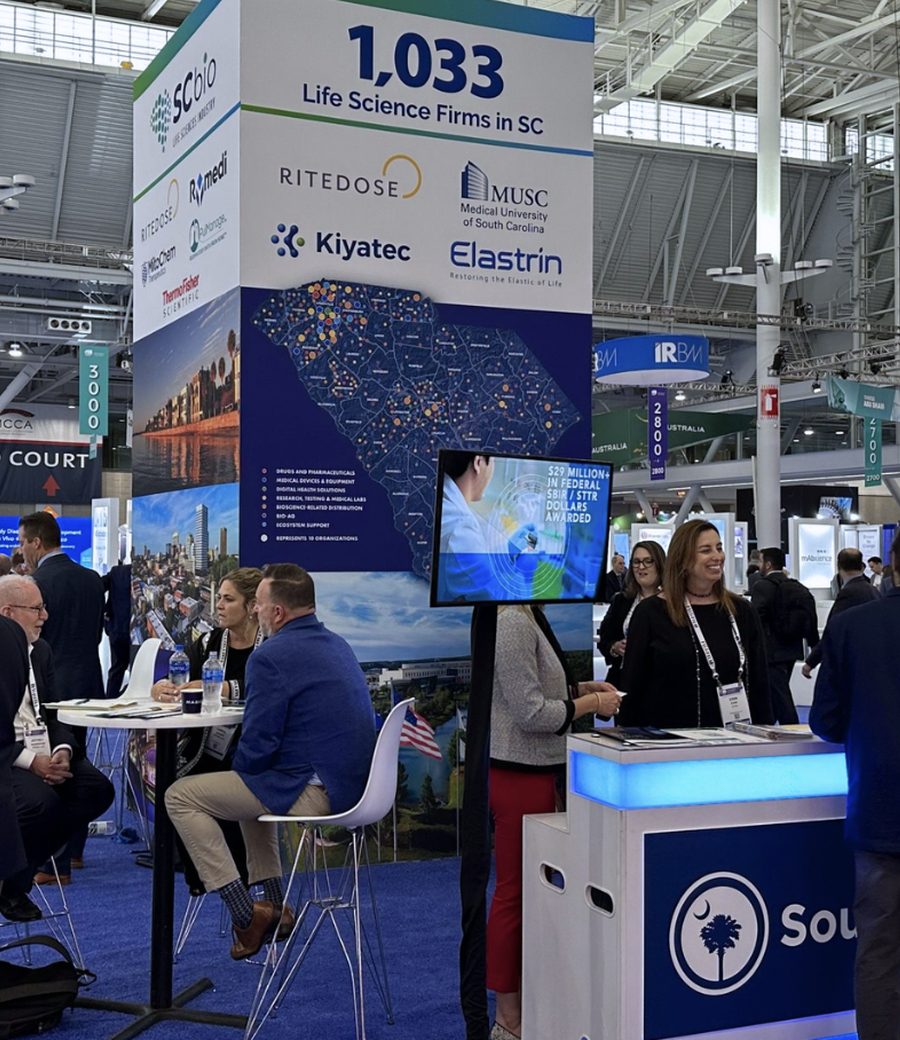
The Zucker Institute regularly participates in regional and national conferences where industry leaders, investors, entrepreneurs, and technology transfer professionals come together to explore new partnerships and commercialization opportunities.
The Science of Success, uniting industry leaders, executives, officials, and supporters in Greenville, SC for insightful sessions on biotech, medtech, pharma, digital health, policy, therapeutics, and economic development.
Where technology transfer professionals from around the globe meet to connect, make deals and gain insights from world-class speakers and panels.
Where business and breakthroughs converge. Whether it’s across hemispheres or across the aisle, BIO brings the industry together to solve the most pressing issues facing our world.
Questions
We understand that you may have questions regarding our resources and support for researchers. Below, we’ve compiled some frequently asked questions to provide you with the insights you need. Whether you’re interested in collaborating with our researchers, exploring licensing opportunities, or learning about our innovation ecosystem, we’re here to assist you.
We prioritize partnerships with companies interested in commercializing our inventors’ innovations. Depending on the innovation’s type and stage of development, partnerships may involve:
Industry partners should review our intellectual property, licensing agreements, and research collaboration policies. Our team will guide you through the necessary procedures for collaboration.
Browse the full portfolio on the MUSC technology portal (opens in a new tab).
Our licensing managers utilize various strategies to identify potential licensees, including leveraging existing relationships, conducting market research, and attending industry events. We also promote inventions through our website and direct outreach efforts.
Studies have shown that the majority of licenses result from contacts already known by the inventors or ZI staff. We also identify licensees through market research, industry events, and existing relationships.
Finding a potential licensee can vary in duration, depending on factors such as the innovation’s attractiveness and stage of development. Most university inventions require substantial commercialization investment, impacting the time to attract a licensee.
Industry partners’ active involvement significantly improves the chances of finding a licensee. Utilize your industry networks to identify potential licensees and communicate the technical advantages of the innovation.
Yes, an invention can be licensed to multiple companies, either non-exclusively or exclusively for specific applications or geographies.
At the Zucker Institute, we strive to provide a conducive environment that enables innovation. Through our extensive resources, we support researchers in translating their ideas into impactful solutions.